
By Ezaruku Draku Franklin
The National Environment Management Authority on Tuesday arrested three people in connection to the destruction of Lubigi wetlands in Kampala. The move follows a Presidential directive for all illegal occupants to vacate wetlands. The exercise the Ministry of Water and Environment, the Environment Protection Police Unit and sister security agencies to restore Lubigi wetland in Kampala.
Dr Barirega Akankwasa, the Executive Director of NEMA in a press release said while three people were arrested in the exercise, several others are on the run. He said those arrested will be prosecuted in court.
“Today’s operation is the first of several others that have been planned to apprehend persons who illegally settle in wetlands and/destroy critical ecosystems. We once again appeal to all those affected to voluntarily leave wetlands and seek advice from responsible lead agencies on how best to sustainably utilise natural resources. In addition, we also caution against the consumption of foodstuffs grown in urban wetlands such as Lubigi, because they are laden with heavy metals which are dangerous for human health,” he said.
He said in the same exercise, alien plant species which had been introduced into sections of the wetland were removed, including the cutting down of eucalyptus trees that are known to degrade the ability of wetlands to hold water.
“The Lubigi wetland had been severely compromised by illegal encroachment in the form of settlement, agriculture, dumping of murram and draining,” he said.
Lubigi is the largest wetland serving Kampala City and the neighbouring districts to the North and Western Parts of the city. Dr Akankwasa said the wetland system serves as a critical water catchment area for the central region and is a major source of water for the water stressed areas of the cattle corridor in Central Uganda.
He said the rain water from the northern and western suburbs of the city such as Bwaise, Kisaasi, Kawaala, Busega, Mengo and surrounding areas drains via underground aquifers and surface run-off, into the Lubigi wetland.
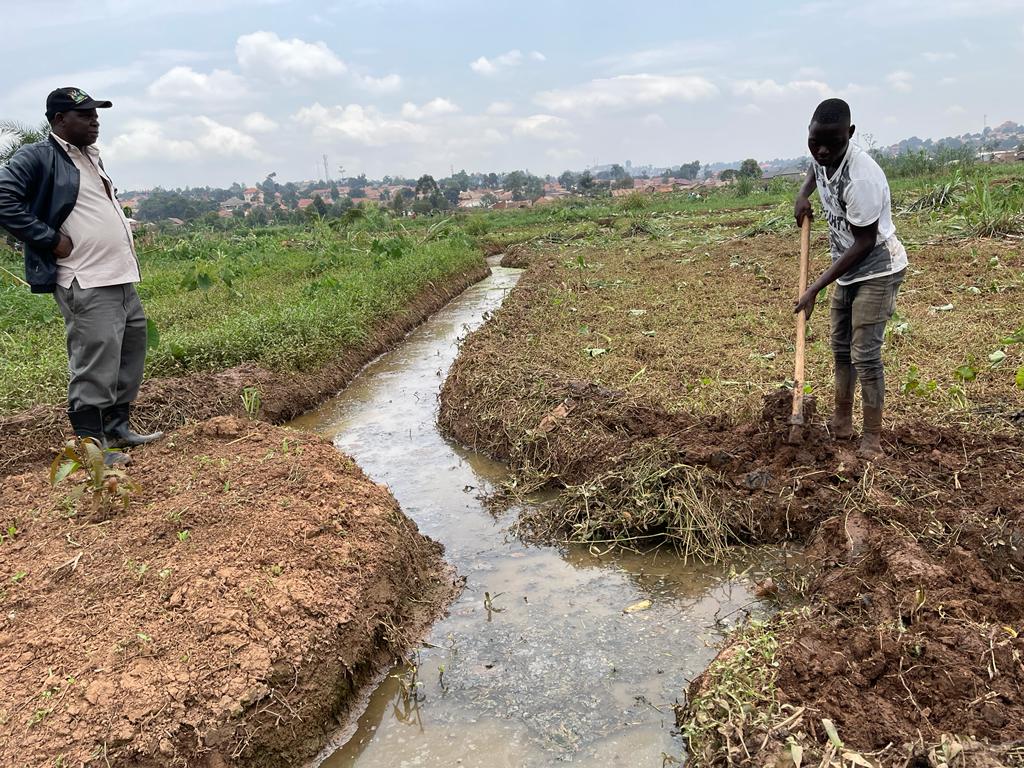
Dr Akankwasa Barirega: “The wetland is also a unique ecosystem that supports over 200 plant, insect and bird species, including the national bird, the Crested Crane. Wetlands are an important part of our ecosystem because they are a habitat and breeding ground for some species, they perform hydrological functions such as regulation of water quality, reduce downstream soil erosion and aid in flood control by storing excess water during storms.”
“The wetland is also a unique ecosystem that supports over 200 plant, insect and bird species, including the national bird, the Crested Crane. Wetlands are an important part of our ecosystem because they are a habitat and breeding ground for some species, they perform hydrological functions such as regulation of water quality, reduce downstream soil erosion and aid in flood control by storing excess water during storms,” he said.
Over the years, wetland coverage in Uganda declined from 15.6% in 1994 to 8.9% by 2017 at a rate of 2.5% per year. Dr Akankwasa said unless radical measures are instituted immediately to restore the integrity of Uganda’s wetlands, coverage may reduce to 1.6% by 2040.
“In addition, the third National Development Plan (NDP III) set a national target of increasing national wetland cover from the current 8.9% to 9.57% over a period of five years,” he said.
According to NEMA, The exercise at Lubigi will continue with restoration of the core sections of the wetland through blocking channels, removal of alien vegetation and pulling down of illegal structures.
“We shall also close the illegal taxi parks/stages along the busega- mityana road. Together with UNRA areas of the road reserve will be adequately demarcated and barriers will be put in place to prevent future re-encroachment,” Akankwasa said.
 Africa Planet Watch
Leave a comment