
Adopted from World Agroforestry
From elephants to monarch butterflies, creatures that migrate are increasingly finding their routes interrupted by cities, farms and other human footprints. A study in 2020 found that less than 10% of the land in the world’s protected areas is surrounded by fairly intact habitats.
That sounds like bad news, but scientists say there’s more to the story.
In many parts of the world, the land between protected areas consists of a patchwork of small farms and trees. This mix of crops and woodland creates what scientists call ‘natural habitat in working landscapes’.
That’s a feature of agroforestry systems, and it is a win-win for humans and wildlife. Planting trees on farms creates corridors that many species can use to move from one protected area to another. And farmers, in turn, reap the benefits in various ways, such as soil health, erosion control and proximity to pollinators.
Ultimately, this strategy helps maintain the biodiversity of natural areas while contributing not only to the livelihoods of smallholders, but also to their families’ health, by providing them with a more diverse diet containing a greater variety of micronutrients.
Those benefits, however, run the risk of being eliminated from new guidelines being drafted to protect the planet’s biodiversity, which will be discussed during the UN Biodiversity Conference to be held 7–19 December in Montreal, Canada.
At that meeting, countries are expected to finalize and adopt a Post-2020 Global Biodiversity Framework, setting goals for the protection and sustainable use of their natural resources, or biodiversity, for the next three decades. The agreement will be the latest in a series of strategic plans for implementing the UN Convention on Biodiversity, which entered into force in 1993.
Initial conversations about the new framework agreement recognized the importance of ‘managed’ landscapes, including agricultural and urban landscapes, for the conservation and sustainable use of biodiversity, because they provide ecosystem services and help connect natural habitats.
A working group meeting in June, however, appeared to backtrack on that understanding, and there are fears that negotiators at the December conference could revert to a vision that sees only natural protected areas as containing – and conserving – biodiversity.
“That would be short-sighted, especially in light of the lessons we should have learned from the Covid-19 pandemic, which has disrupted global food supplies and led to food insecurity in many parts of the world,” says Anja Gassner, science and policy adviser for the Global Landscape Forum and senior scientist at the Center for International Forestry Research and World Agroforestry (CIFOR-ICRAF).
“Natural biodiversity cannot be separated from agricultural biodiversity, and we need to treat them together, holistically, if we are to address the combined challenges of climate change, biodiversity loss and ensuring that people around the world have access to healthy food that is produced sustainably.”
In an updated draft of the framework agreement, released in October, just one of the 20 targets refers to agriculture, and only with regard to food production. It ignores the ways in which mosaic landscapes of crops and trees can connect natural habitats and maintain ecosystem services, while also producing food.
In its introductory text, the draft offers a choice between two ways of understanding the focus of biodiversity protection. One refers only to “natural” ecosystems, while the other speaks more broadly of “all terrestrial, freshwater, coastal and marine ecosystems”.
It’s important to take the more holistic approach, Gassner says, because globally, only about 17% of land on Earth is in protected areas, while about 40% is used for agriculture. Policies that target both, creating synergies between the two landscapes, would contribute to the protection and sustainable use of natural resources on nearly half the planet’s land.
“To home in on protected areas without harnessing the potential of managing agricultural landscapes to maintain and enhance biodiversity would be a serious mistake,” she adds. “Besides producing crops, agricultural landscapes include forest fragments and wetlands that provide natural habitat for wild species, as well as ecosystem services.”
Traditionally, the Convention on Biodiversity has promoted the protection of natural ecosystems to keep agriculture from encroaching on natural areas.
“The challenge now is to change that point of view,” Gassner says. “We need policies that provide incentives to manage agriculture in a way that promotes biodiversity conservation while also providing healthy, safe and equitable food for everyone.”
That means moving away from ‘monocropping’ – the large-scale production of single crops that require large amounts of synthetic fertilizer and other agricultural chemicals, she adds.
By setting specific targets for the amount of land countries should manage as agro-ecosystems, the new biodiversity framework could promote farming that combines diverse crops, livestock and trees, maintaining natural nutrient and water processes as much as possible, so there is less need for agricultural chemicals.
Sustaining those natural processes can also help farmers better withstand the effects of climate change, Gassner says.
Africa is a good example of why it’s important to include agricultural landscapes in the new biodiversity agreement, as well as how farmers are already combining forests, crops and livestock sustainably, says Philip Dobie, a senior scientist at CIFOR-ICRAF.
More than 15% of Africa’s land is in protected areas, but the amount varies from country to country. In Kenya, 7% of land is formally protected, but scientists say that the area required by “umbrella species” – those that need a large habitat area, which, when protected, also protects other species important for ecosystem health – amounts to 20–30% of the country’s land mass.
“Because of pressure from the growing human population, creating more protected areas really is not possible politically,” Dobie says. “Agriculture is extremely important in sub-Saharan Africa, both for national economies and for family livelihoods. Managing protected areas and adjoining agricultural lands holistically can provide space for both wildlife and food production.”
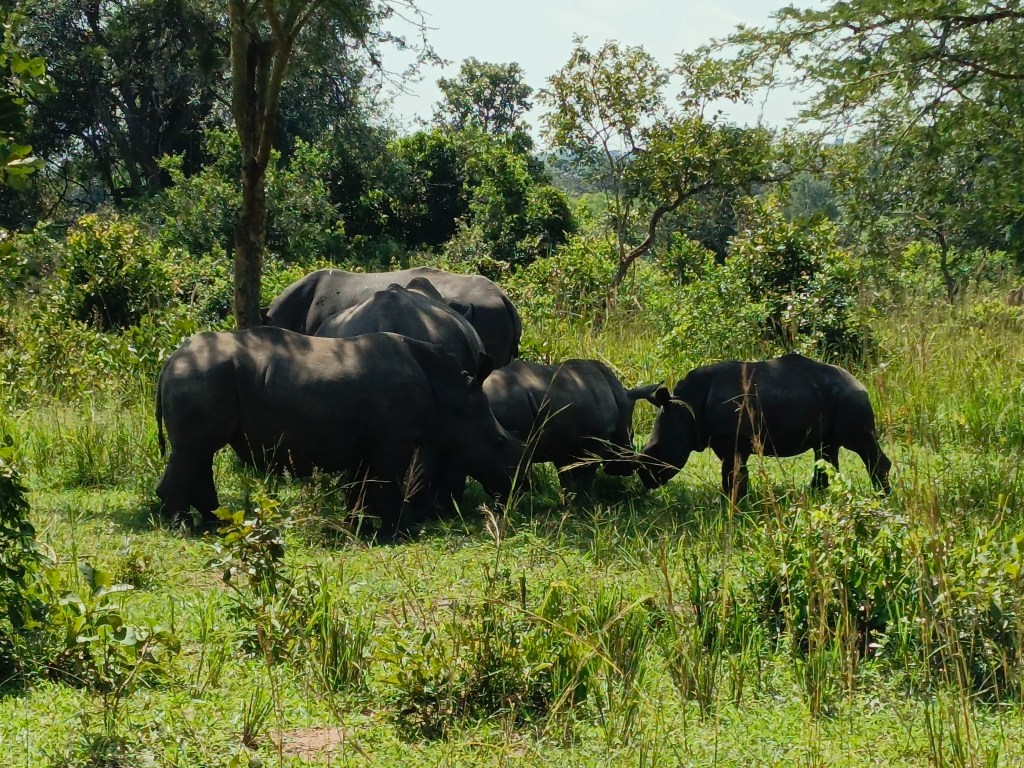
That’s already happening in Kenya’s 400-square-kilometre Ol Pejeta Conservancy, where cattle share a landscape with zebras, giraffes and a growing black rhino population. In 2019, the conservancy generated revenues of USD4.8 million from tourism and USD1.4 million from livestock production, as well as providing 700 jobs.
In regions of Ethiopia where combining crops and livestock has depleted the soil on small subsistence farms, adding trees and shrubs to the landscape has helped farmers restore degraded land, protect biodiversity and diversify their income. Promoting agroforestry within the new biodiversity agreement could provide an incentive for governments to invest in scaling up such examples there and in other countries, Dobie says.
“The Post-2020 Global Biodiversity Framework must make clear that agriculture is also important for conservation,” he adds. “By considering natural and working landscapes together, with integrated conservation measures, it can encourage policies that will maintain and enhance biodiversity in protected areas while increasing food security and improving livelihoods for farming communities.”
 Africa Planet Watch
Leave a comment