
By Ezaruku Draku Franklin
Technical experts have called on African governments to appreciate the need to integrate cross-sectoral policies that consider population dynamics into planning processes.
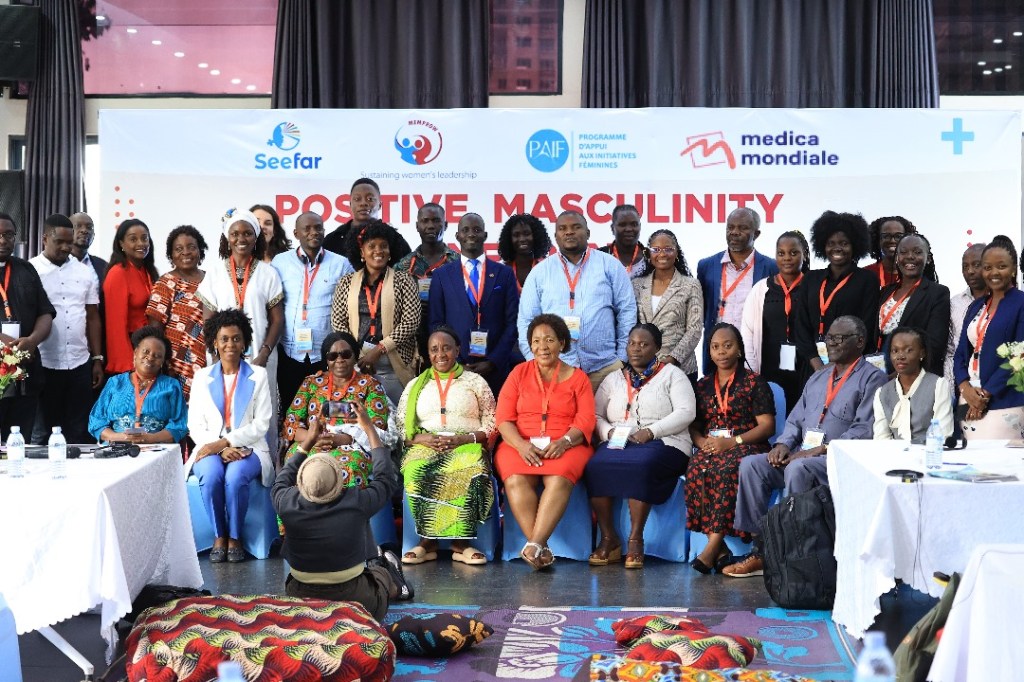
This call was by different technocrats drawn from various government ministries in Cote d’Ivoire meeting in Abidjan during a training workshop organised by the USAID-funded Building Capacity for Integrated Family Planning and Reproductive Health and Population, Environment and Development Action (BUILD) project. Various participants said there is little synergy built into work by the government and other stakeholders.

Clive Mutunga, BUILD Project Director said technocrats from different ministries must appreciate the cross-sectoral integrated approaches, including the population, environment, health and development.
He said the BUILD project recognises that the underlying challenges that low- and middle-income countries face – lacklustre economic development, environmental degradation, loss of biodiversity, high levels of unmet need for family planning, and rapid population growth-are interconnected.
Edouard Yao, National Coordinator, Leadership for Environment and Development (LEAD) Cote d’Ivoire said the country has several population, environmental and development challenges.
“Population growth is still high, yet the country has low use of modern contraceptives among married women (23%) and high rates of teenage childbearing (30%). As a country, Cote d’Ivoire government ministries and departments work in silos, despite the immense potential of amplified cross-sectoral impacts if the work in an integrated manner. We have brought technocrats from different ministries to see if the concept of integration can be adopted,” he said.
“Sectors cognisant to demographic dividend such as education, health, employment and governance seem to have little understanding of the interconnection, let alone the design of processes and tools for integrating, population issues into their policies, plans”, he said noting that as much as the country desires the wellbeing of its citizens, nothing much can be achieved as long as the system thinking has not been bought by the policy makers.
According to Dr Durand Oboue, the national coordinator, Pan African Climate Justice Alliance (PACJA) in Cote d’Ivoire Cote d’Ivoire, the training has come at an appropriate time when the country is developing its national policies on climate change including the National Adaptation Plan (NAP).
“To begin with, the country is already experiencing the negative impacts of climate change. “The problem is huge,” he said.
Dr Oboue said environmental degradation and climate change are critical factors for sustainable development in the country. He said the country has lost about 67% of its 16 million original hectares of forest cover, and only about 2.5 million hectares of forest, or less than a quarter of its original forest cover, remain. “The country is witnessing hotter temperatures, far more inconsistent rainfall, and rising sea levels. These changes have impacted water security and the environment,” said Dr Oboue adding that the country needs to integrate her policies.
The training workshop aims to develop local capacities in the integration of population, health, environment and development (PHED). A pool of experts is expected to emerge from the engagement to drive the PHED agenda not just in Côte d’Ivoire but across the West African region.
The BUILD project has hubs in countries representing regions in Africa and Asia: Côte d’Ivoire (West Africa), Kenya (East Africa), Malawi (Southern Africa), and the Philippines (Asia Pacific).
 Africa Planet Watch
Leave a comment