
Ezaruku Draku Franklin
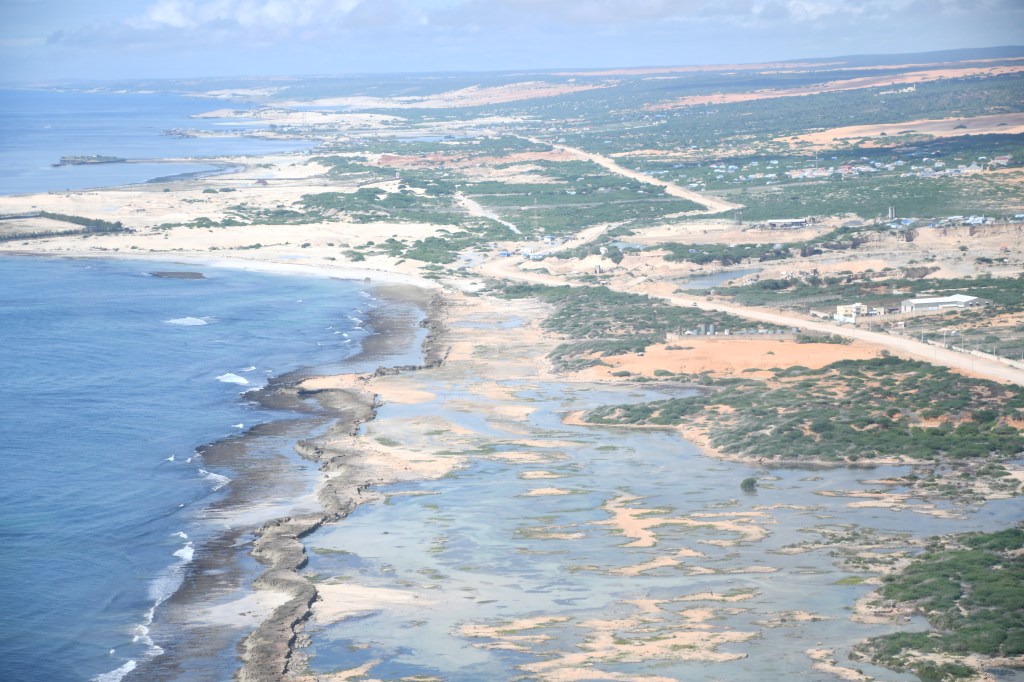
An aerial view of impart of flooding and the rising water levels of Indian Ocean along the Somali Coast. Photo/Ezaruku Draku Franklin
Cries have been getting louder and louder over the last three months in Marka and Baraawe, which lie over 100 kilometres south of Mogadishu, because the roads are cut off as a result of heavy downpour. Supply routes cut off by both the Al-Shabab insurgents and the heavy El Nino rainfalls, homes flooded and residents left in despair.
The situation gets dire because even when the ongoing El Nino rains were not there, the same roads have been prone to Al-Shabab terrorist attacks, squeezing the people of Somalia between the hard walls and the rocks.
While Al-shabab terrorists have been the main concern in Somalia for some time, now another threat has suddenly emerged – the Super El Nino rains that are threatening lives and property of the locals. The same is also threatening the security of the areas because troop movements and equipment transportations are being hampered by the floods as a result of the heavy downpour.
Osman Hiraab, a resident in Dayanley, Baraawe district said the rains have been pounding the area for some time and the situation is likely to worsen between now and December, with their homes washed away and roads impassable because of the heavy floods.
“You can see the situation with your own eyes. We have been struggling and if it was not for the ATMIS forces who sometimes provide security and equipment to open up the badly damaged roads, we would be in deeper trouble by now,” he said.
To Hiraab, the heavy El Nino rains mean more famine. He said they cannot engage in any meaningful activities because movement is restricted. The area is infertile and they normally get their food supply from other areas where food crops can grow, but Hiraab says this cannot be possible because the roads are completely washed away.
“I am wondering how we are going to Survive. I am scared that if aid agencies do not come to our rescue, the situation will soon worsen and we shall die of hunger,” he said pensively looking in a distant location.
Hiraab is not alone expressing fear about the looming famine as a result of the super El Nino, threatening the horn of Africa. For Saada Nashaad, the situation has added more threat onto what Al-Shabab has presented. Also a resident in the same area, Saada said when the rains first started, they thought it was the normal rains. However, she said they were later warned that this could be a Super El Nino where rains are more than what El Nino rains present.
“I am here but my mind is very far because I don’t know what will happen tomorrow. These rains have caused a lot of problems to us and I am not sure where we shall get food from. I have children I must feed and if no help comes, it will be difficult,” she said.
Across in Baidoa, South West State where over half a million people are coping with the floods, the situation looks grim. Baidoa is the main hub of the Somali inter-riverine region and state capital of Bay Region, where most of the river originate and this is where climate change and terrorism have conspired against the locals, boxing them into a corner.
The locals in the area have been cut off by floods and the only option is air transport, which is unaffordable to majority of the population.
Already Oxfam Africa has raised red flag about the dire situation in Baidoa. The organisation says the connivance between nature and the armed conflicts have pushed the residents to the extreme that the situation is about to explode.
“I cannot find words strong enough to express the emotions I felt during my recent visit to Baidoa. Together with a mission team led by the Deputy Prime Minister of the Federal Government of Somalia, Salah Ahmed Jama comprising of SODMA, UN OCHA, WHO, IOM and national and international humanitarian aid agencies, we witnessed the devastating impact of the El Nino flash floods on this resilient town and its courageous residents,” Juliet Moriku Balikowa, the Oxfam Somalia Country Director said.
“As we drove through a forlorn Baidoa and struggled to access the IDPs, the scars of both climate change and conflict were strikingly visible. The relentless droughts and flash floods have pushed this community and many other communities across Somalia to the brink of despair. With heavy hearts, we trudged through the muddy terrain, realizing that our struggle to reach the affected people was nothing compared to the struggles they face every single day,” she added.
“As we drove through a forlorn Baidoa and struggled to access the IDPs, the scars of both climate change and conflict were strikingly visible. The relentless droughts and flash floods have pushed this community and many other communities across Somalia to the brink of despair. With heavy hearts, we trudged through the muddy terrain, realizing that our struggle to reach the affected people was nothing compared to the struggles they face every single day,” Juliet Moriku Balikowa, The Oxfam Country Director for Somalia
She said listening to the story of children, women and the elderly, who call Baidoa home echoed the despair and desperation that come from being the least responsible for global warming, yet bearing the harshest consequences.
“These resilient souls, who contribute the least to climate change, are paying the maximum price. Baidoa stands as a stark reminder of the urgent need for climate justice. Baidoa’s resilient community deserves justice for the disproportionate suffering they endure due to climate change,” she said.
She said the rights of the affected people must be recognized and protected noting that “it is a cruel irony that those who contribute the least to global warming are the ones who face the harshest consequences. This injustice must be acknowledged, and we must work toward equitable solutions that alleviate their plight.”
To her, the urgency of the situation cannot be overstated, calling for swift to provide immediate relief and support to these vulnerable communities.
“Lives are at stake, and every moment counts. Let us join hands to advocate for climate justice and demand equitable solutions for those affected by climate-related disasters. Together, we can amplify our impact and make a difference in the lives of the resilient Somali people,” she said.
The Somalia Country Director said while the road to recovery may be long, all the different actors must commit to rebuilding the shattered lives of the affected communities and strengthening their livelihoods and resilience to climate change, by providing them with the necessary resources and support to restore hope and resilience in the face of adversity.
“It is our collective responsibility to stand in solidarity with all affected communities and ensure they receive the assistance, justice, and hope they so desperately need and deserve. The urgency of the situation cannot be overstated. We must act swiftly to provide immediate relief and support to these vulnerable communities.” Moriku said.
“I urge each and every one of you to lend your voice, your actions, and your resources to support the people of Baidoa and Somali people in general. We must pressure governments and donors to urgently release the necessary funds to provide life-saving assistance and rehabilitation. Together, we can rewrite their story and ensure that they receive the assistance, justice, and hope they so desperately need and deserve,” she added.
A November 2023 update provided by the UNICEF, the organization said with the ongoing rains, more than 1.5 million people are at a growing risk with Hirshabelle the most affected with 638,000 people at risk, followed by Jubaland states with 607,000 people affected. Others are South West with 212,000 people, Puntland (81,000), and Galmudug (83,000),
The report says global climate models have confirmed the presence of El Niño conditions and a positive Indian Ocean Dipole, which are likely to influence enhanced rainfall and flooding in most parts of the country.
UNICEF said the situation is so bad that in Baidoa, 145 (49 male and 96 female) screened and admitted for Severe Acute Malnutrition.
Mr Etienne Peterschmitt, the Foods and Agriculture Organisation Representative in Somalia, said there should be no excuses for inaction when climate models from global and regional forecasting centers show a strong confidence, more than 90 percent of increased rainfall over southern parts of the country due to a concurrence of El Niño conditions and a positive Indian Ocean Dipole phenomenon.
“This will result in a rare ‘Super El Niño’ weather event from October to December this year. For riverine communities, this above average rainfall can result in flooding that can cause widespread damage to property and hamper critical services such as education, health care and transportation, cutting off critical lifesaving supplies to affected communities.
He said a disaster of this magnitude threatens lives, as well as disrupt agricultural production through the flooding of farmland and crops, leading to increased food insecurity.
Security threat posed by the El Nino
The heavy rainfall is also presenting another challenge to the African Union Transition Mission in Somalia, which is battling the Al-Shabab terrorists across the country.
The military planners and leaders say troop movement and movement of fighting equipment have been hampered because the roads are impassable. Brigadier General Peter Gaetano Omola, the commander of the Ugandan Contingent in Somalia said the heavy rains have posed a big challenge in troop movement, which the terrorists may exploit to hit the population.
“We are experiencing a lot of rainfall in the entire Somalia. This is affecting us, it’s affecting our troops in forward operating bases because most of them are flooded, may supply routes are flooded and basically impassable. It is affecting the supplies to our troops and at the same time also affecting some of them local populations whose homes are also flooded and we are coordinating with some of the NGOs in our areas of operations to see how the local population can be supported,” he said.
He said the situation is so bad that both homes and the routes are flooded, pausing serious challenges to offer services to the local communities they serve.
In Baidoa, where more than half a million people are affected, the Ethiopian forces under the ATMIS have extended out relief support to the most affected population.
The ATMIS Ethiopian National Defense Forces are distributing essential food and non-food items to the flood affected people in Baidoa.
In the area, President Abdiaziz Hassan Mohamed established the South West State El-Nino Response Committee, to respond to the emergency crisis. Constituted by South West State “Major Ahmed, the ATMIS ENDF Public Information Officer said they are rescuing residents stranded in areas submerged by the raging floods.
“Our troops based in Bardheere, Burdhubo, and Garbaharay Forward Operating Bases in Jubaland’s Gedo region have conducted evacuation and rescue operations. These operations were successfully conducted using boats supplied by the Somalia Disaster Management Agency (SODMA),” he said.
Abdinassir Abdi Arush, the South West State Minister for Humanitarian Affairs and Disaster Management expressed his gratitude to the ATMIS forces and said it comes at the right time when it is needed most.
The Minister who chairs the El Nino Response Committee said the relentless rains, which started in early October, have claimed 17 lives, with hundreds of thousands displaced.
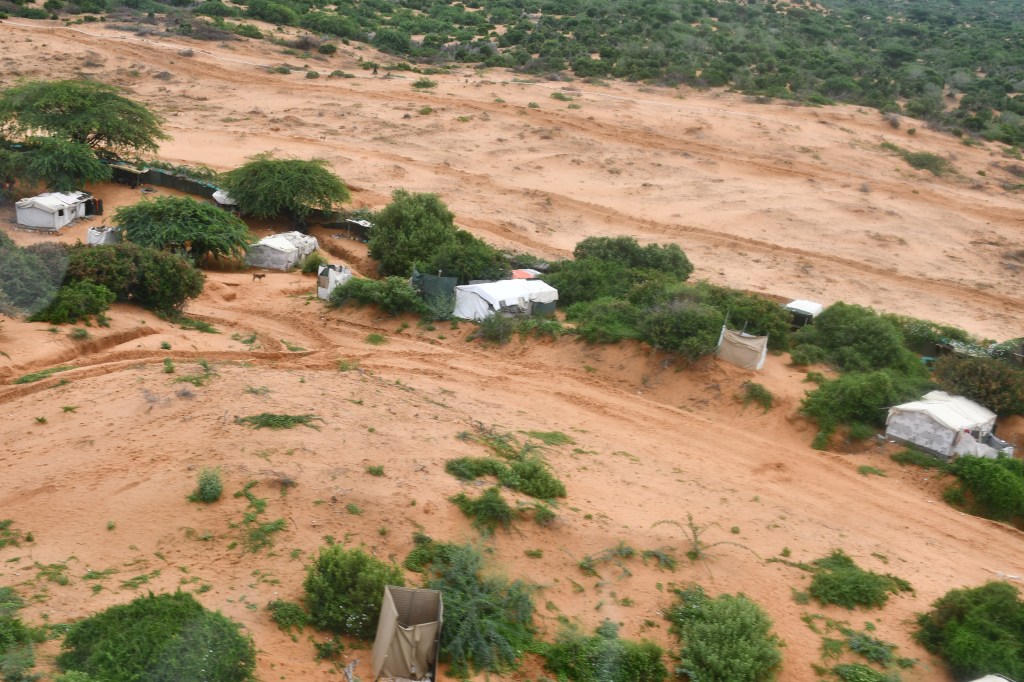
An aerial view of parts of Marka in Somaliam. The El Nino rains have washed away roads, floode home and made roads impassable. Photo/Ezaruku Draku Franklin
“Right now, the humanitarian situation in Southwest Somalia has deteriorated, with entire villages and farms submerged. We need an urgent, wider response, and we appeal to the federal government of Somalia and the Somali community for their assistance,” he said.
He said while the humanitarian agencies working in South West state were doing their best to contain the situation, there is an urgent need for a wider response to address the crisis.
“We’re also calling on the federal government of Somalia and the Somali community to come to help us avert further humanitarian crises,” he said.
 Africa Planet Watch
Leave a comment