
Ezaruku Draku Franklin
The Lake Victoria Basin Commission has developed a regional water quality management policy, which the commission says will harmonise different national policies to efficiently and effectively manage water resources and quality across the East African Community partner states.
Corletta Ruhamia, the Executive Director of Lake Victoria Basin Commission said the policy has been developed with the objective to harmonize the existing water quality policies at national and regional levels to support the implementation of different activities to preserve water resources.
“The reason being water quality issues have been left behind. If you look at from the national point of view, you find most of the policies did not talk much or consider much on the water quality. Yet we believe if you don’t know the water quality you have, then you have no water, because you don’t know how to allocate that water, you don’t know what is suitable in terms of the purpose of use,” she said.
Ruhamia said the regional water quality policy will help in addressing the question of pollution and other issues that affect water quality in East Africa.
“So we want to look at different issues that are affecting the water quality and have a collective action to ensure we preserve and prevent pollution in our water bodies. In short, that’s what we are aiming to ensure we manage our water resources effectively and efficiently,” she said.
She said the policy will not only cover lake Victoria, but different basins across the region, including the Nile Basin, Lake Albert, Tanganyika and others that are shared by more than one country.
“So we want to have a policy that will cover different basins because our partner states are under different basins, but not only Lake Victoria Basin,” she said.
Ms Verdiane Nyiramana, the chairperson of Nile Basin Discourse, a network or civil society organisations working for the betterment of people along the Nile basin said as CSOs, their duty is to ensure that communities’ interests are embedded within the policy.
She said Nile water provides livelihoods to millions of people and therefore there must be equitable access to the water resources for all countries along the basin.
“So we really advocate and inform our governments that this water has been given to everyone, and we should be able to protect them, share equitably, and instead of bringing conflict out, be the source of peace and good relations between people,” she said.
Engineer Chut Isaac Chol, the Assistant Director of Water Resources & Irrigation at ministry of water resources and irrigation in South Sudan said with shared resources across different partner states, it is only ideal that proper resources management policies are put in place to safeguard their usage and management.
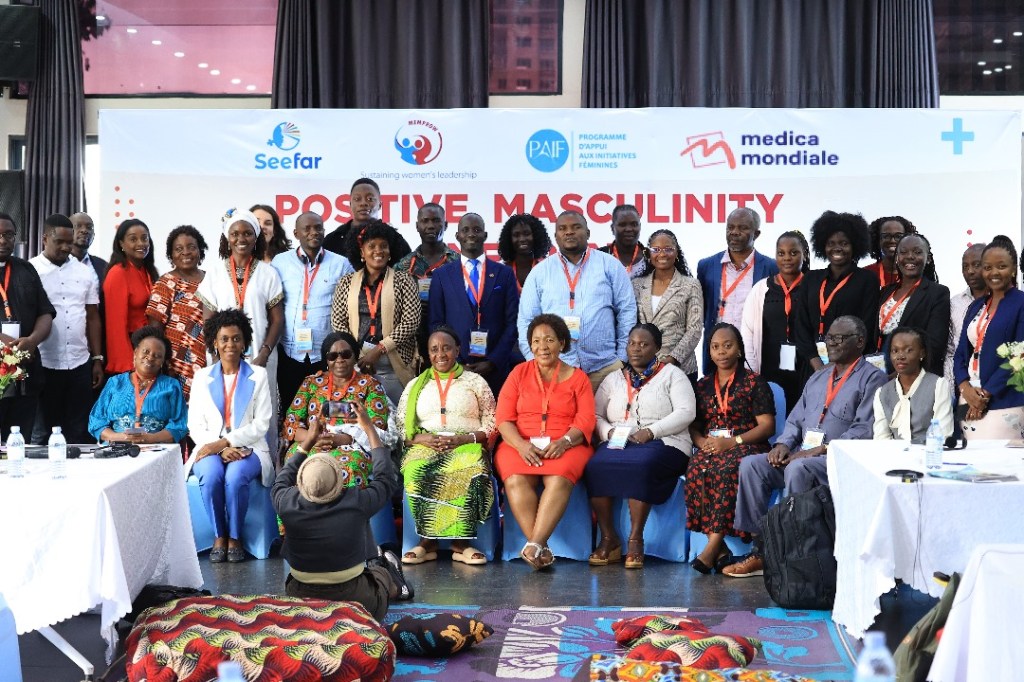
“That’s why it needs also the collective responsibilities and also need cooperation and collaboration. That’s why we are here to interact with the other stakeholders, partner states and the other institutions like the NBI, with different centers and other stakeholders to discuss those important issues of water quality and how are we going to address the challenges that we are facing as partner states,” he said.
Simon Etimu, the Assistant Commissioner in the Ministry of Water and Environment in Uganda. Different countries that share the water bodies have different challenges.
“Since pollution has no boundaries, water flows, pollution can move from one country to another. So it’s important that, one, we identify issues and put interventions as a common action. Water quality here is important because most of the time is, by definition, quality looks at fitness of water for purpose. And you’ll find that water as it moves can be losing or gaining other purposes. So it’s important that we look at it holistically so that we have one common message for communication,” she said.
He said not people want to invest in water resources because of the risks associated and the developing a common regional policy will help in attracting more investors in the sector.
“This has been a neglected area, but in order to level the ground, water quality needs to be taken as a key variable in this area, because quality is the heart of the water. That’s the real thing we are talking about. So I think in our interaction here, we look at the challenges, we look at the institutions, we look at the policies that govern the different countries. Where are the gaps? Where are the areas of commonalities? Where do we need to engage better?” he said.
 Africa Planet Watch
Leave a comment