
By Ezaruku Draku Franklin
The Uganda Tourism Board has partnered with Enabel Uganda to promote sustainable tourism and fair trade practices across the country. This, the two entities said will help to ensure that while engaging in tourism, the environment in which they operate is conducive, not only for the tourists but also for the employees, ensuring that nature is protected and there is social accountability at all levels.
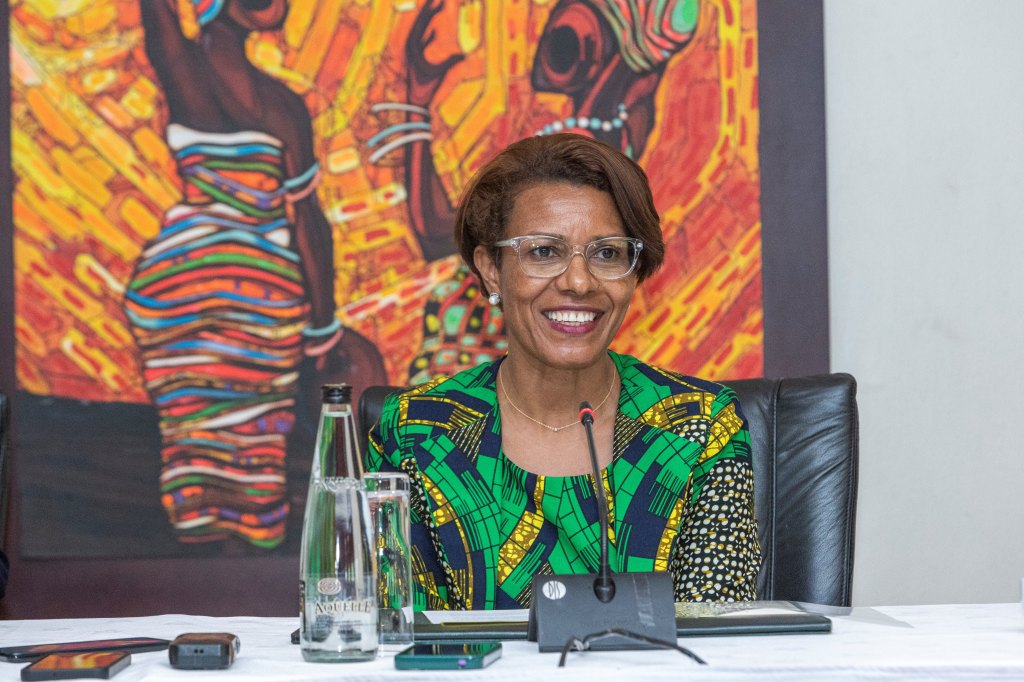
Lilly Ajarova, the Chief Executive Officer of UTB adressing journalists during the announcement of Fair Trade Partnership at Srena Kampala Hotel. Photo/UTB
Lilly Ajarova, the Chief Executive Officer of Uganda Tourism Board said the partnership will recognise stakeholders in the tourism value chain who are keen on promoting sustainable and responsible tourism practices in their business operations.
“And very important for us from the Uganda Tourism Board is the fact that we are looking at the bigger picture when we are talking about the POATE 2024 theme being responsible tourism. We are relating this to the bigger picture and policy which include the UN Sustainable Development Goals and very specifically we’ll refer to SDG number 8, Decent Work and Economic Growth,” she added.
She said the partnership with Enabel is focused on promoting sustainability, making places better for people to live in, and better places for people to visit.
“Tourism has the power to change travel, improve living standards, and contribute to the maintenance of natural heritage, cultural heritage, and the diversity that we have. We strongly believe that the promotion of sustainability will bring us to the achievement of the SDG but also point us to the rest of the sustainable development goals and the NRM Manifesto and the National Development Plan 3,” she said, adding that “when we are talking about sustainability, sustainability is an inspiration. It can only be realized if we all take responsibility for making tourism sustainable. It requires personal commitment. It’s not about pointing at other people. It has to start with us as individuals. Responsibility drives sustainability.”
She said while tourism has continued to grow across the globe, the top 20 destinations in the world are dominated by the Nordic countries, Germany, and France, which are also the top source markets for destination Uganda, and hopes that the new partnership with Enabel Uganda will work to position Uganda among the top 10 sustainable tourism destinations in Africa.
“In addition, this should make Uganda a future-fit destination, and this means operating in a way that doesn’t harm people or the environment,” she said.
Protecting the environment, putting an end to plastic pollution
She said while plastic pollution is taking a toll on the environment, UTB with other partners are working to eliminate plastic s from the tourism value chain. She singled out Serena hotel for doing away with plastic water bottles and introducing glass bottles and cups which are reusable.
“We also know that they are one of the properties that are very cautious and have weaved in. responsible sustainable practices in their operations. They remain sensitive towards the improvement and preservation of the environment in which they operate, the responsible management of natural resources, and the use of solar and other clean energy for the last four decades,” she said.
Fairtrade concept, sustainability awards
UTB together with Enabel Uganda will this Saturday award entities that have sustainably promoted tourism best practices and ensure that they uphold the principles of fair trade. Ajarova said the introduction of fair trade practices in the tourism sector will make all the sector players responsible and ensure that employees are treated better and have a decent work environment.
“Over the last few weeks, we have also learned about fair trade tourism, which is being championed by Enabel Uganda, a concept that is new to us in Uganda but is picking up very fast. Together with Enabel, UTB will host the Sustainability and Fair Trade Awards this Saturday, the 25th of May 2024, which will be recognizing the exhibitors that will showcase sustainability in their participation, but also the early adopters of the fair trade. We will look out for the best sustainable boots, sustainable tourism operation, innovative companies that will be showcasing at Poate, as well as how fair trade is weaved into the daily operation of the tourism enterprises,” she said.
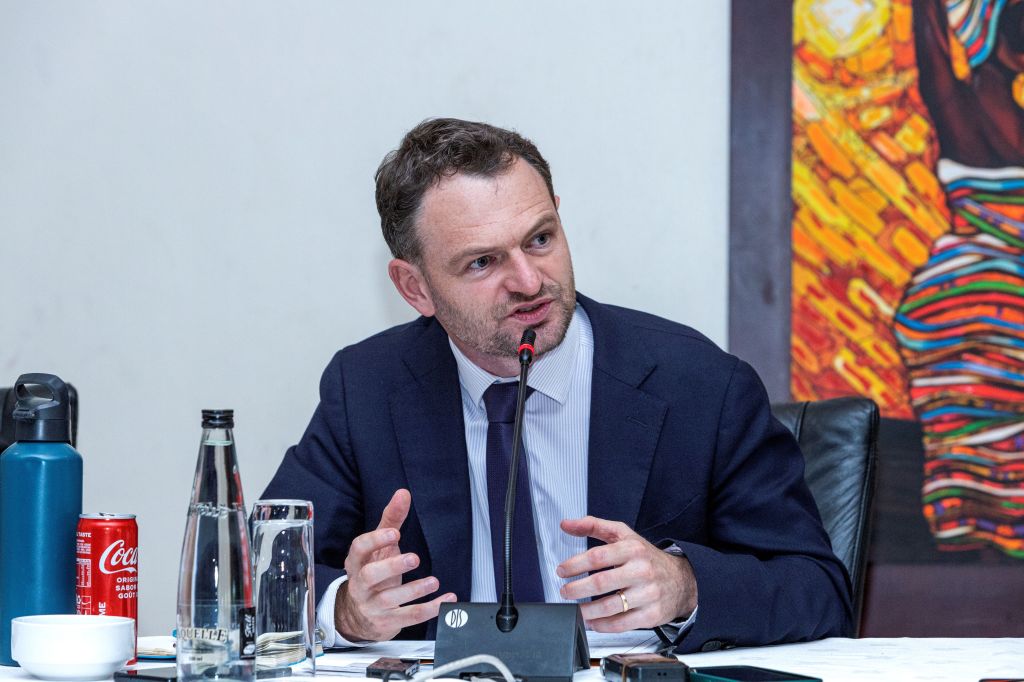
Mr Tom Vanneste, the Enable Uganda resident representative addressing journalists in Kampala
Mr Tom Vanneste, the Enable Uganda resident representative said the entity has been investing in the tourism landscape since 2014-15. He said for the next five years, Enabel will inject up to Shs20 billion for sustainable tourism development in the country.
“We hope to create over 5,000 jobs for youth, whether these are full-time jobs or self-employment and we hope to work with more than 100 private sector companies in the tourism sector to support them. We hope to train more than 3,000 youth in a non-formal skilling way. These are short courses, three to six months where we give them a skill and they are then certified by an assessment body like DIT and hopefully, you help them to get a job,” he said.
Mr Vanneste also said as part of the partnership with UTB, Enabel will promote Uganda as a preferred tourism destination so that their influx can create more employment opportunities for the locals.
“We want to create more products so that tourists stay in Uganda and that they spend in Uganda. So we will work together with UTB on that, but also together with other private sector tour operators and hotels and we would like to help tourism companies grow. So we want to work with 50 to 100 hotels, tour operators, tourism companies, and help them grow,” he said.
On the fair trade pratcices, he said Enabel will work with different entities in the tourism sector to ensure that they understand and respect the principles. He said while jobs are being created, the majority of them are exploitative to the workers and added that under the fair trade promotion, they want to make sure these jobs are good.
“I was traveling in Fort Portal some years back and I went to Fort Portal to one of these hotels that attracts so many people. You can see all the tourism vans, they stopped there. And we asked the staff there, what are your work conditions? What do you earn? And for working a whole month, some of them only earned Shs50,000 shillings. There is no NSSF, but right there, tourists were paying Shs30,000 and Shs40,000 for the buffet. It’s not acceptable,” he said.
“You know you have fair trade coffee. We would like to do the same in the tourism sector, with hotels, with tour operators, that if those companies treat their staff fairly, with a fair wage, good treatment, we award them a certificate. So that’s for two things. So that people when they have the choice between hotels with or without a certificate, will choose the hotel with the certificate to support them,” he added
He said working together with the UTB, they will mobilise hotels and all tourism sector players to embrace fair trade practices so that they offer a conducive working environment to their workers and also pay the commensurately
“Because at the end of the day, a job has to be decent to be a serious job and this is why we launched the certification so hotels have to prove certain things, they have to show that they are committed to paying a decent wage, NSSF, and then they get certified and we help them on this journey,” he said.
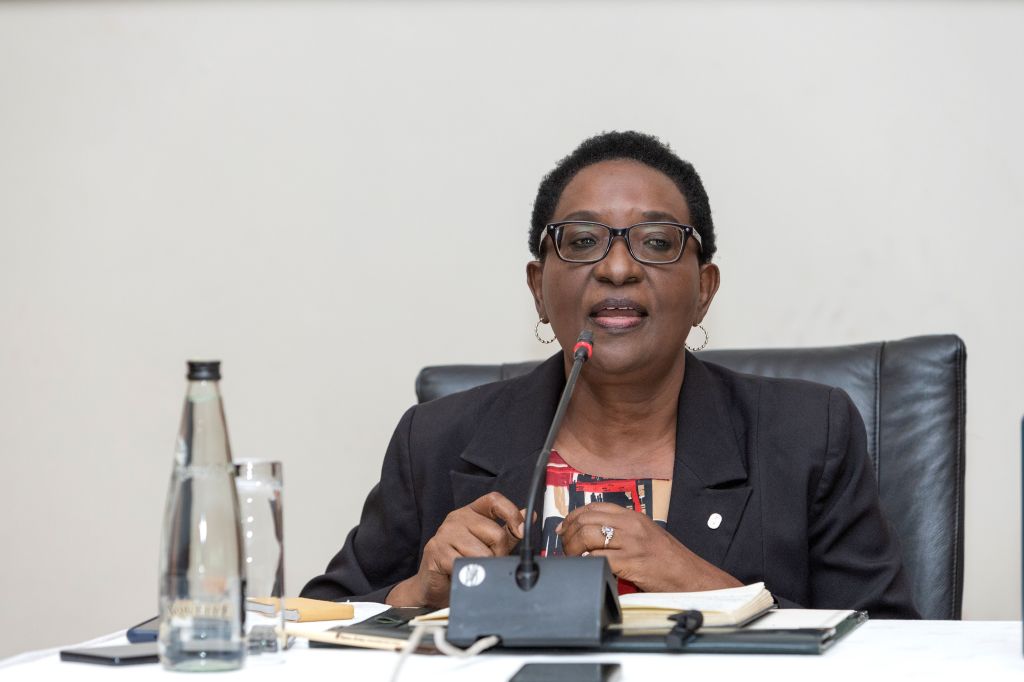
Allen Ampaire, the marketing manager of Serena Kampala Hotel
Allen Ampaire, the marketing manager of Serena Kampala Hotel said they made a deliberate effort to cut out plastics from the hotel by phasing out plastic water bottles and introducing glass water bottles. She said they are also greening the environment by planting more trees within the hotel premises and making sure they promote sustainability in the sector.
“What we are doing is to see that we cut out plastics because I think plastics have been one of the big endangers of the environment. We are very passionate about the environment. If I look at what we are doing at Kampala Serena, you see that we did away with plastic and we were the first hotel to do that and I’m very glad that the other hotels have also followed. So most of the hotels, if you go around in Kampala, we no longer use plastic. It’s not only that, we’ve been planting trees. If you look at where we are, it’s a forest in the city and it’s very intentional. We don’t cut down our trees, it is part of us ensuring that we have fresh air,” she said.
 Africa Planet Watch
Leave a comment